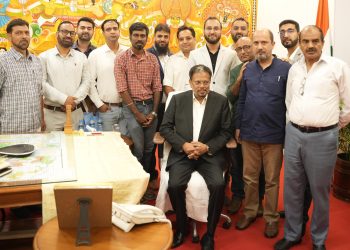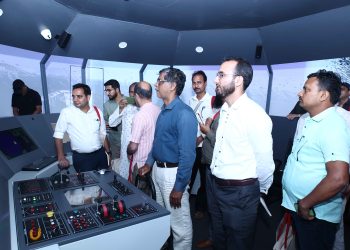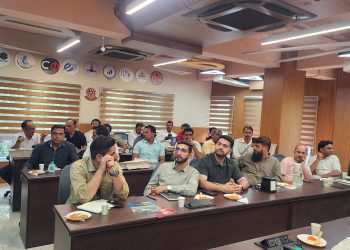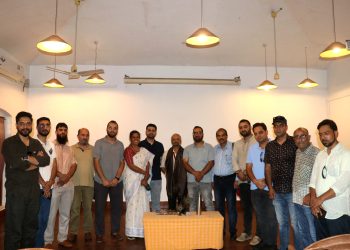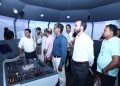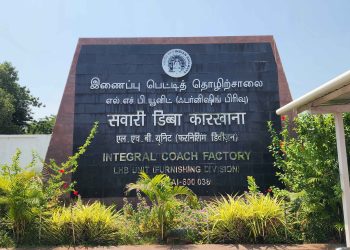

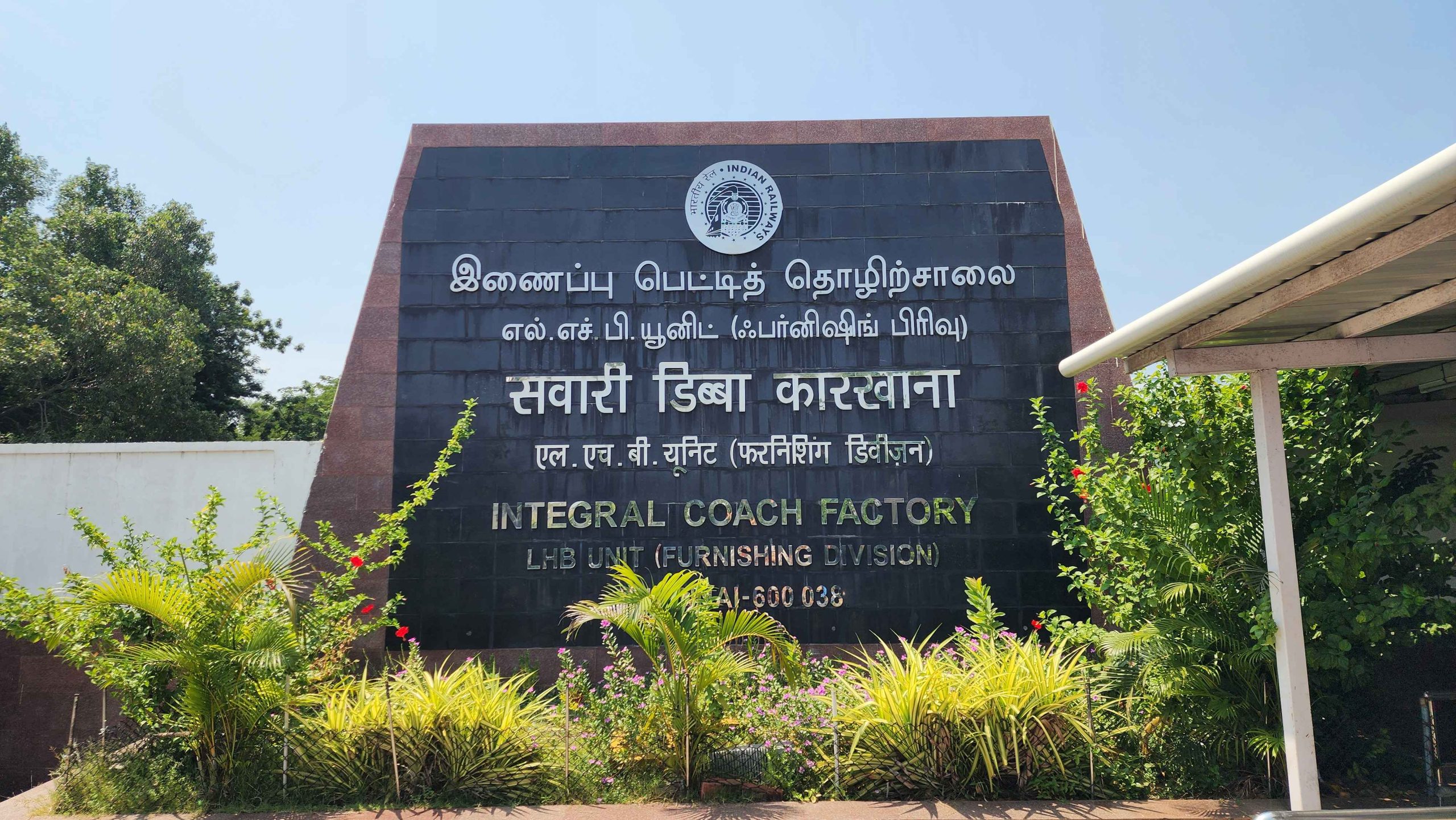
Chennai, September 17: The manufacturing journey of India’s modern passenger trains was brought into sharp focus as a media delegation from Jammu and Kashmir visited the Integral Coach Factory (ICF), Perambur, witnessing the intricate processes involved in transforming bare coach shells into fully equipped, technologically advanced trainsets.

During the visit, Binyamin Shora, of Daily Roshni, was briefed by Saravana Murthy, WML Trigal, Production, who is responsible for production of distributed-power rolling stock including Vande Bharat, Kolkata Metro, EMU and MEMU.
The official explained that the furnishing factory receives coaches in a bare-shell condition, after which they undergo a series of specialised processes before emerging as operational passenger coaches.
From Bare Shell to Passenger Coach
The first major stage involves the painting process, carried out in a dedicated paint shop. Alongside painting, the coaches receive sound and thermal insulation.
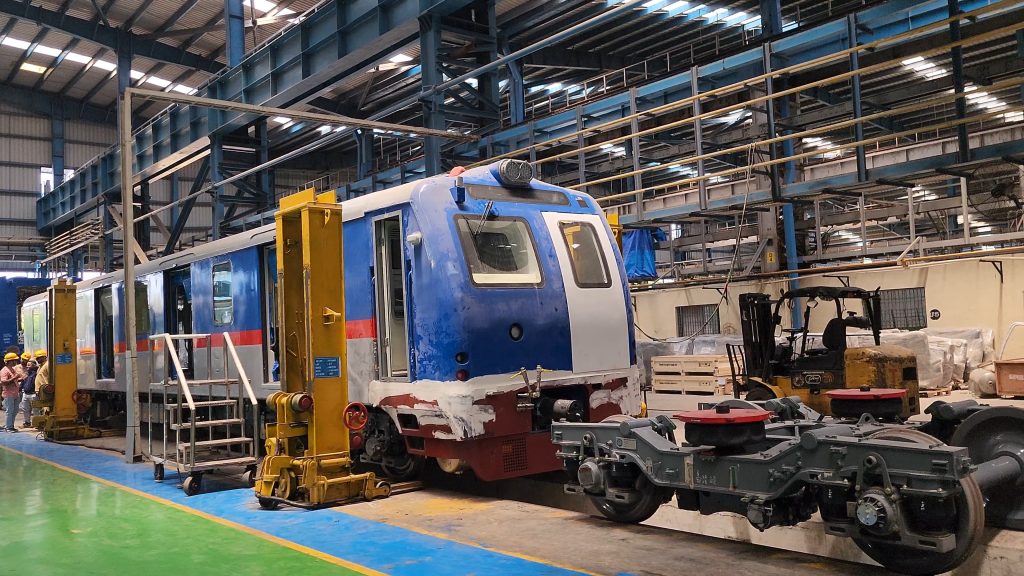
Sound insulation is designed to reduce noise levels inside the passenger compartment and enhance travelling comfort, while thermal insulation plays an important role in maintaining the required conditions inside air-conditioned coaches.
Following painting, the coach shells enter the build and furnishing stage, where the various interior systems and equipment are installed.
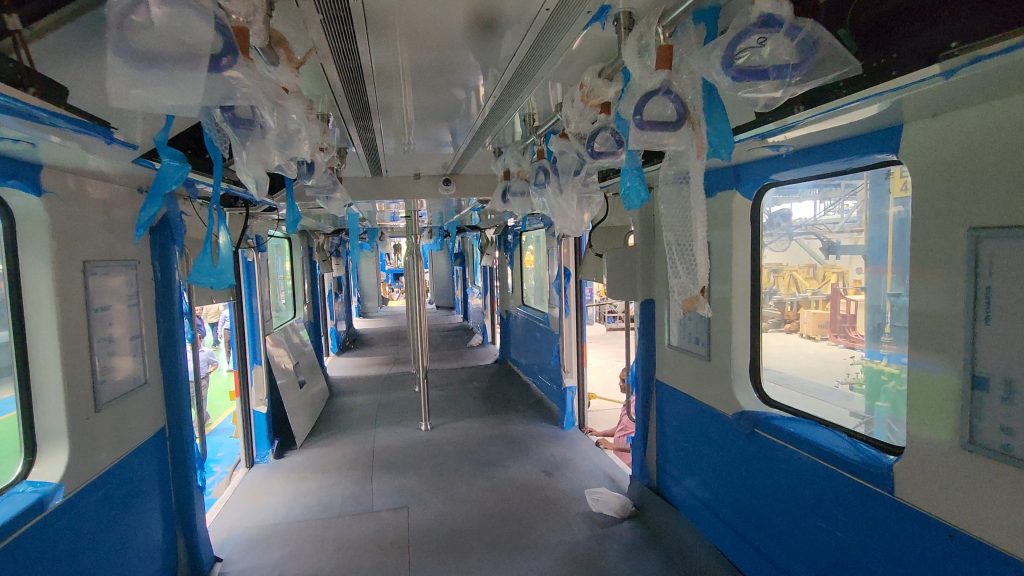
The delegation also witnessed a production bay originally created for Train 18 in 2019. The facility is now being utilised for the production of Kolkata Metro coaches, demonstrating the flexibility of ICF’s manufacturing infrastructure.
Kolkata Metro: A Different Powering Philosophy
The Kolkata Metro coaches showcased another distinctive engineering configuration. The eight-car train comprises two four-car basic units, with 50 per cent of the coaches being motor coaches.
The train draws 750-volt DC power through a third-rail current collection system, unlike conventional overhead electrification arrangements. The configuration is particularly suited to the underground environment where available clearance is a critical consideration.
The official explained that the 750V DC supply is subsequently converted into AC through an IGBT (Insulated Gate Bipolar Transistor) converter, with a variable-voltage, variable-frequency drive used for controlling traction motor speed.
Why 50% Powered Coaches?
According to the briefing, the distributed-power arrangement, with motors provided on half of the coaches, contributes to acceleration, speed capability, tractive effort and braking performance. The arrangement also contributes to improved riding characteristics and helps minimise jerking.
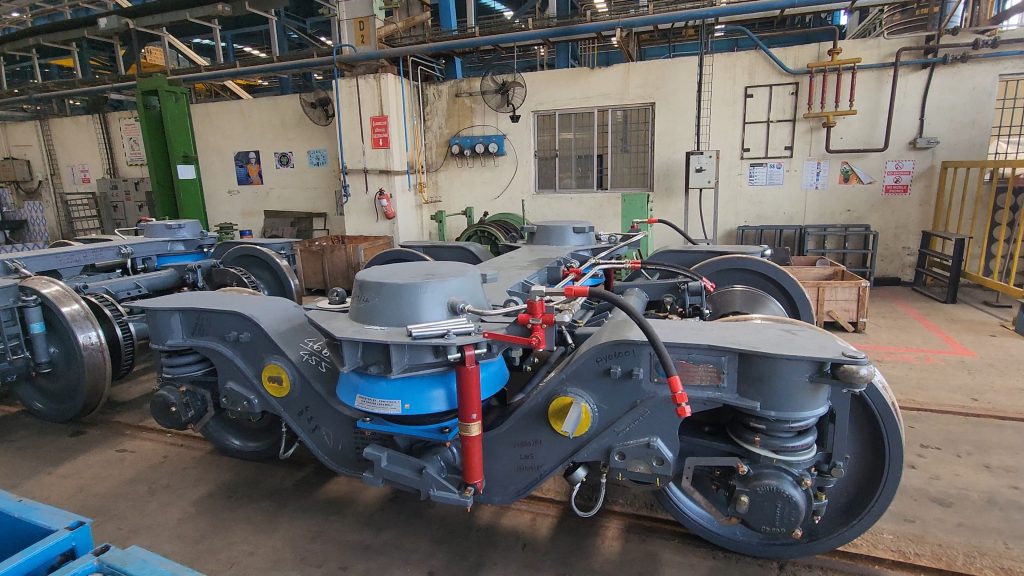
The engineering of the bogies also plays a crucial role in ride quality, alongside the traction system.
Vande Bharat: Engineering for Different Operating Conditions
The same broad distributed-power philosophy is followed in Vande Bharat trainsets. ICF is producing 8-car, 16-car and 20-car configurations, with around half of the coaches equipped for traction power.
The visit provided the delegation an opportunity to understand how modern Indian train manufacturing combines coach-body engineering, insulation, traction technology, bogie design and passenger-comfort systems under one integrated production process.
The ICF visit formed part of the ongoing PIB Srinagar-organised media tour, offering journalists from Jammu and Kashmir a first-hand look at India’s railway manufacturing capabilities and technological developments.