
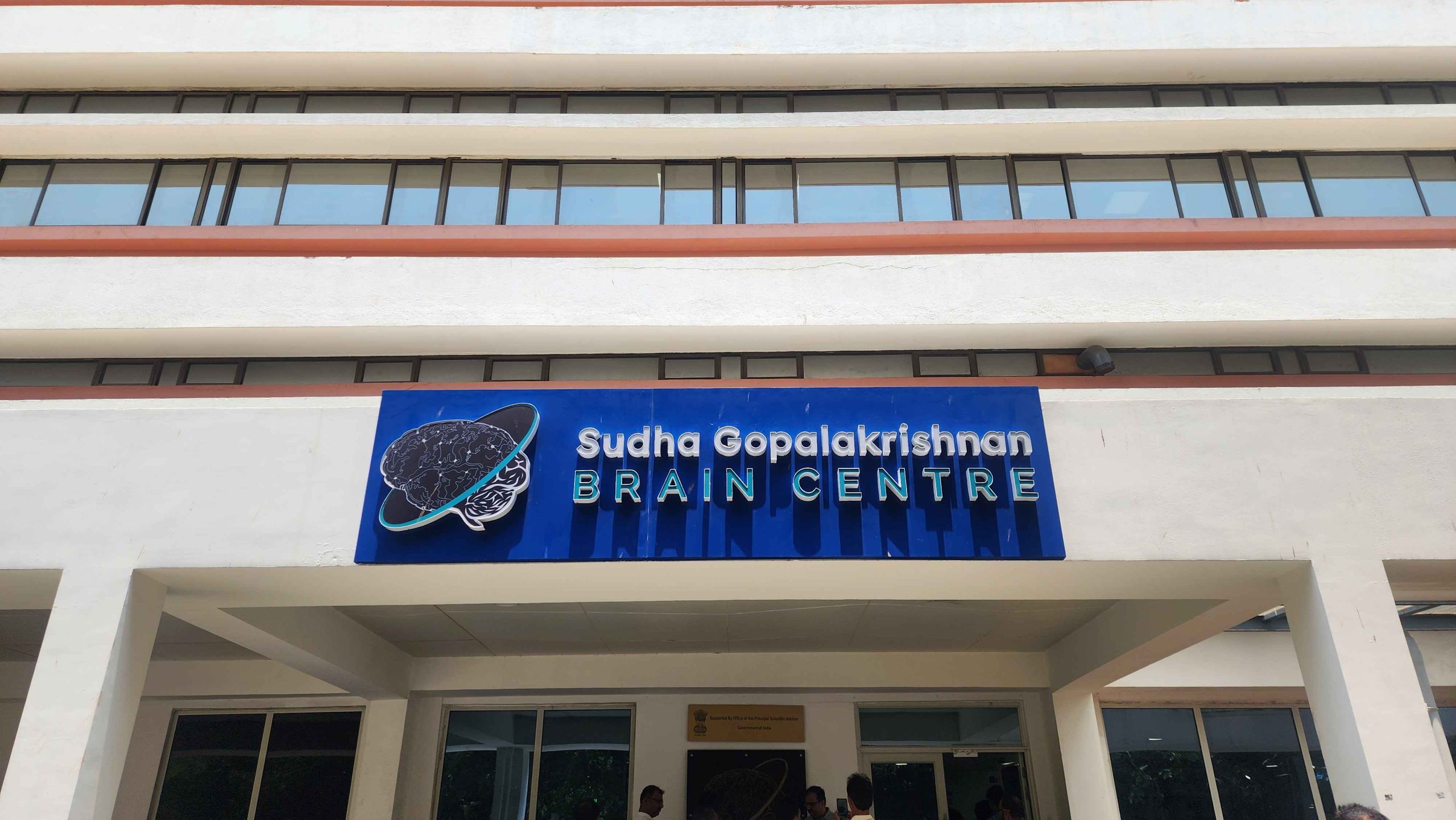
Chennai, September 15: A media delegation visiting Chennai under a Press Information Bureau (PIB) media tour visited the Sudha Gopalakrishnan Brain Centre at the Indian Institute of Technology Madras (IIT Madras), where the delegation was briefed on cutting-edge research involving human brain imaging, cellular-level mapping and high-resolution three-dimensional brain models.

During the visit, journalists observed the laboratory facilities and were shown preserved human brain specimens maintained for research. Experts explained how the human brain is processed with extreme precision to study its structure and cellular details and digitally map them at high resolution.
The Sudha Gopalakrishnan Brain Centre focuses on mapping the human brain at cellular resolution and developing high-resolution 3D models. The research brings together multiple scientific disciplines, including advanced imaging, histology, bioinformatics and neuroinformatics.
The delegation was informed that the centre has established large-scale research systems to study different regions of the human brain and changes associated with different stages of life. Such research can contribute to a better understanding of brain development, ageing, neurological disorders and other changes affecting the nervous system.
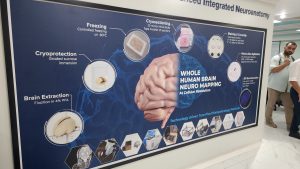
During the visit, the journalists were also briefed about research initiatives such as DHARANI and ANCHOR, which are aimed at developing highly detailed digital atlases and three-dimensional maps of the human brain.
The visit offered the media delegation a rare insight into the intersection of neuroscience, medicine, engineering and advanced technology, showcasing efforts to understand the human brain at an unprecedented level of cellular detail.
For the visiting journalists, the Brain Centre represented a striking example of how advanced scientific research and technology are being brought together to explore one of the most complex organs of the human body.