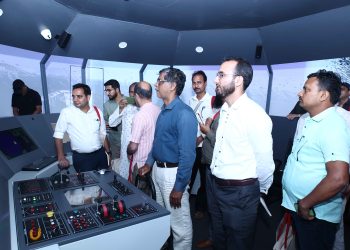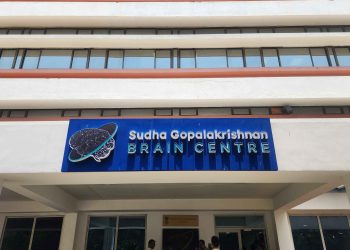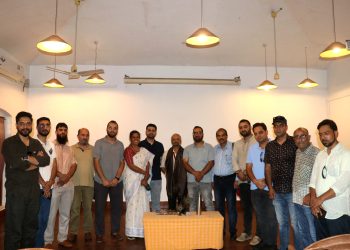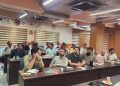

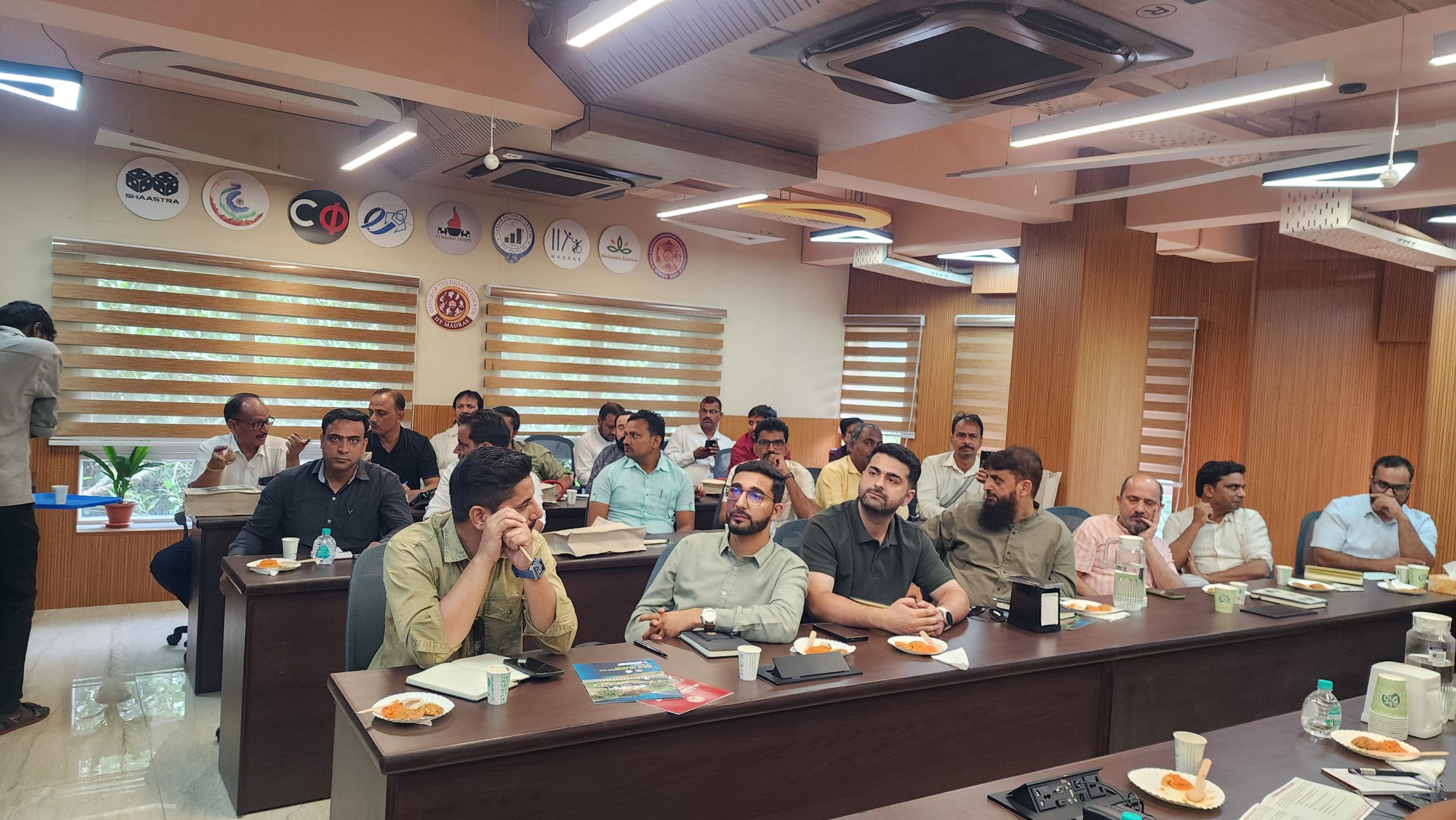
Chennai 15-09-2026: A media delegation on a Press Information Bureau (PIB) media tour visited the Indian Institute of Technology Madras (IIT Madras) on Monday, gaining an insight into the institute’s expanding role in education, research, innovation, entrepreneurship and technology development.

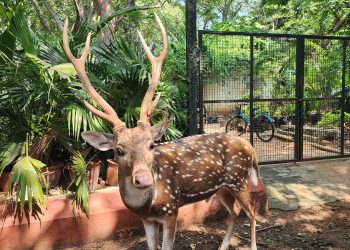
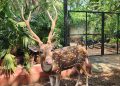
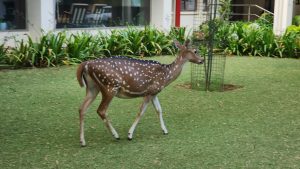
A pleasant surprise awaited the visiting journalists as they entered the campus, where they spotted deer moving freely in the green surroundings. For the delegation, seeing wildlife within an educational institution was a memorable experience, particularly as deer are more commonly associated with forests and wildlife parks. The sight also offered a reminder that the preservation of natural habitats and biodiversity can go hand in hand with education and institutional development.
During the visit, the delegation interacted with Prof. V. Kamakoti, Director, IIT Madras, who engaged with the visiting journalists and shared perspectives on the institute’s vision, innovation ecosystem and efforts to take its impact beyond the campus.
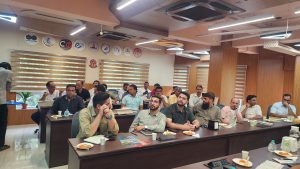
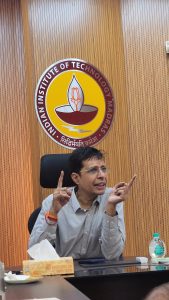
A major part of the visit focused on the Centre for Outreach and Digital Education (CODE), where the delegation was briefed by Prof. Andrew Thangaraj, Professor of Electrical Engineering and Chair, IIT Madras Centre for Outreach and Digital Education.
The presentation, titled “Scaling the Reach of the IITs: NPTEL and IITM non-campus BS programmes,” highlighted the growing reach of digital education through NPTEL and IIT Madras’ non-campus programmes.
The delegation was informed that the July–December 2026 cycle had recorded 39.59 lakh-plus enrolments and 15.15 lakh-plus examination registrations, with 1,054 courses being offered. The presentation also highlighted the significant growth of NPTEL’s course offerings and learner participation over the years.
CODE’s initiatives extend beyond NPTEL and include School Connect, IIT Madras BS programmes, web-enabled M.Tech and diploma programmes, executive education, workshops and short-term training programmes, as well as conferences and symposia.
The visit also provided an opportunity to understand how IIT Madras is using digital platforms to make quality education accessible to students, faculty members and working professionals beyond the traditional campus.
Research Park: Connecting Academia with Industry
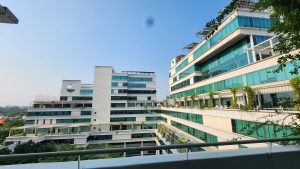
The delegation subsequently visited the IIT Madras Research Park, described as India’s first university-based research park. The Research Park serves as an interface between academia and industry, bringing together corporates, research laboratories, startups, venture funds and sector-specific incubators.
The media delegation was briefed on the Research Park’s role in supporting technology transfer, startup development, incubation and industry-academia collaboration.
According to figures presented to the delegation, the Research Park ecosystem has supported 580 startups, 268 graduates and 216 incubatees, with investments of ₹17,552 crore by angel investors and venture capital firms and a reported startup valuation of ₹80,402 crore. The presentation also cited 13,000-plus jobs created, more than 700 patents filed, 215 startups in the market and ₹4,300 crore revenue in FY 2024-25.
The Research Park’s current official information describes an ecosystem involving R&D partners, incubated startups, laboratories and specialised centres working to convert research into real-world products and services.
Healthcare innovation at HTIC
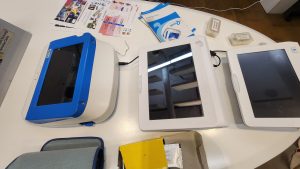
One of the key highlights of the Research Park visit was a visit to the Healthcare Technology Innovation Centre (HTIC), where the delegation was briefed about emerging healthcare technologies and their potential to make medical services more accessible.
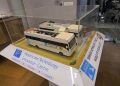
The journalists were introduced to innovations relating to eye surgery, advanced ambulances/medical mobility solutions and blood-testing and diagnostic technologies, showcasing how engineering and medical sciences are being brought together to address healthcare challenges.
HTIC is a joint initiative of IIT Madras and the Department of Biotechnology, Government of India, and brings together technologists, engineers, doctors, healthcare professionals, industry and government agencies to develop healthcare technologies. Its areas include diagnostics, imaging, robotics and other healthcare applications.
The delegation also witnessed the wider innovation ecosystem covering areas such as materials science, nano-functional materials, solar energy, quantum technologies and lab-grown diamonds, reflecting the breadth of research being pursued at IIT Madras and its associated centres.
From Chennai to the world
The delegation was also briefed about IIT Madras’ international expansion, including IIT Madras Zanzibar, established in Tanzania in 2023 as the institute’s first international campus. The programme brings together students from India and several countries and offers programmes including Data Science and Artificial Intelligence and Chemical Process Engineering.
The institute’s material also highlighted IIT Madras’ global ambitions, entrepreneurship ecosystem and focus on emerging areas including Artificial Intelligence, quantum computing, cybersecurity, space technology, advanced mobility, energy and green technology.
The visit offered the journalists a broader understanding of how IIT Madras is evolving beyond a conventional higher-education institution into an ecosystem where education, research, entrepreneurship, healthcare innovation and industry collaboration converge.