


Author: Syed Majid Gilani
Maulana Syed Muhammad Yasin Shah Gilani was born on 18 July 1890 at the historic Khanqah-e-Mu‘alla, Srinagar.
His life stood as a powerful example of determination, preservation of culture, and a profound love for knowledge.
Although he did not receive formal education in subjects such as English, mathematics, or science, he acquired deep mastery of Islamic teachings, jurisprudence (fiqh), philosophy (hikmat), the Qur’an, and Hadith. He was also a distinguished linguist, fluent in Persian, Urdu, and Kashmiri.

Inspired by his forefathers, Maulana embarked upon a spiritual and intellectual journey, following in their footsteps. He devoted himself to the recitation of the Qur’an, remembrance of Allah (dhikr), spiritual retreats (chilla kashi), seclusion (itikaf), and constant divine remembrance.
Under the guidance of his revered father and spiritual mentor, Pir-o-Murshid Syed Ghulam-ud-Din Gilani, Maulana diligently embraced riyazat—the path of spiritual discipline and purification of the self.
Alongside his professional expertise in Unani medicine, his passion for Islamic history and jurisprudence deepened further, strengthening both his scholarly and spiritual pursuits.
From his father, he inherited a priceless legacy: a collection of ancient Persian manuscripts passed down through generations. His commitment to learning and intellectual growth remained unwavering, as he dedicated himself to preserving his family’s cultural and scholarly heritage.
Deeply inspired by the teachings of Syed-ul-Mursaleen, Prophet Muhammad ﷺ, Maulana’s life exemplified humility, compassion, and righteousness. With firm resolve, he remained steadfast in his beliefs and values.
In his tireless pursuit of spirituality and Islamic knowledge, Maulana Syed Muhammad Yasin Shah Gilani traveled extensively—across the remote villages of Jammu and Kashmir, as well as distant regions such as Campbellpur (now Attock), Murree, Rawalpindi, and Islamabad. During this period, his youngest son, Syed Muhammad Yusuf Gilani, had already settled in Campbellpur, Punjab. Additionally, Maulana’s close relative Syed Ahmad Gilani, then residing in Rawalpindi, also hosted him during his stays.
As a Unani physician, Maulana not only treated physical ailments through herbal remedies but also provided comfort and healing through compassion and empathy.
Relying solely on his Unani practice, he was blessed to perform Hajj by sea—a journey lasting six months that cost him only a few hundred rupees.
For him, spirituality was a sacred mission, not a means to wealth or fame.
His life was a shining example of simplicity and humility. He lived with dignity and grace, consciously avoiding worldly luxuries.
His home was modestly furnished with earthenware and simple flooring, reflecting his austere lifestyle. Though he spoke little, his written works in Persian and Urdu were extensive. Thankfully, his manuscripts and travel diaries have been preserved as a valuable legacy. He always remained firmly committed to the principles of Shariah, never deviating from them.
In his sermons, he emphasized strict adherence to Shariah and guided his followers, students, and disciples accordingly. Among his most remarkable achievements was completing 40 consecutive periods of seclusion (itikaf) in the chilla cells of Khanqah-e-Mu‘alla, Srinagar—each lasting 10 days.
The monthly gatherings of Anjuman Tabligh-ul-Islam were often held at Maulana’s residence and were attended by renowned religious and spiritual leaders from across Kashmir. Among them was the eminent religious figure Syed Noor-ud-Din Gilani of Riyazat Teng, Khanyar. These gatherings were presided over by the celebrated Qur’anic exegete Maulana Syed Muhammad Qasim Shah Bukhari (RA), who served as the organization’s president. Maulana Syed Muhammad Yasin Shah Gilani was a respected member of the Anjuman.
The primary objective of Anjuman Tabligh-ul-Islam was to propagate and expand the teachings and mission of Prophet Muhammad ﷺ and the Awliya Allah (saints and Sufis), spreading awareness and enlightenment.
These assemblies provided a platform for scholarly discourse and spiritual guidance, fostering a deeper understanding and appreciation of Islamic values and traditions.
A Personal Reflection
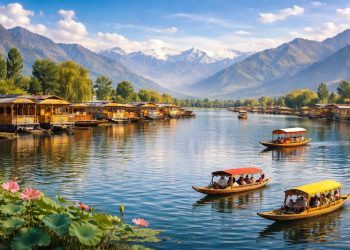
In the autumn of 2018, I traveled to Handwara, a region of North Kashmir blessed with scenic valleys, towering chinar trees, whispering foliage, and glistening streams that imbued the air with spiritual serenity.
I went there at the invitation of the disciples and devotees of my great-grandfather, Maulana Syed Muhammad Yasin Shah Gilani—a towering religious scholar and dignified spiritual figure of his time, remembered for his knowledge, piety, and service to humanity.
I had heard his name throughout my life in family conversations, but when I stood at the place where he had once stayed—and where his memory still lived—an indescribable feeling stirred within me. It felt as though an unseen bond, dormant for decades, had awakened.
From childhood, I had tried to read his travel diaries, letters, and sermons. Most of his work was in Persian—exquisite yet challenging. I also encountered his writings in Kashmiri, but it was his Urdu writings that touched my heart most deeply and brought me closer to him.
During my stay in Handwara, one day I entered an old, tranquil compound where the air was soft and still beneath the shade of walnut trees. My eyes fell upon a marble plaque that read:
“Maulana Syed Muhammad Yasin Shah Gilani – Khanqah-e-Mu‘alla.”
Below it was inscribed that he had laid the foundation of the local Eidgah.
I stood there for a long time. For a moment, it felt as if time had reversed, and I could see my great-grandfather—composed, serene, and humble—engaged in serving the people.
In various villages of Handwara, I met elders who still remembered him with reverence. Respect and affection resonated in their voices. They recalled how Maulana taught them the Qur’an and Hadith, explained the subtleties of jurisprudence, and imparted the true spirit of faith. I realized that this plaque was not merely a memorial—it was a symbol of a light that still illuminates hearts.
I reflected on how arduous the journey from Srinagar to Handwara must have been in those days—no easy roads, no convenient transport. Yet he never stopped, for his steps were guided by love, duty, and faith.
Family History and Lineage
The migration of Syed Ghulam-ud-Din Gilani, father of Syed Muhammad Yasin Shah Gilani, from the ancestral home in Khanyar, Srinagar, to Khanqah-e-Mu‘alla in 1872 CE (1289 AH) marked a significant turning point in the family’s history. However, the Gilani family’s roots in Srinagar trace back to 1322 CE (1095 AH), when Hazrat Syed Muhammad Fazil Shah Gilani (RA)—founder of the Qariyya lineage in Srinagar—first arrived in Khanyar.
This marked the beginning of the Qadri Silsila, whose spiritual and cultural influence deeply shaped the region.
(The complete genealogical lineage from Syed Muhammad Yasin Shah Gilani to Hazrat Imam Hasan al-Mujtaba (RA), Hazrat Ali (RA), and Hazrat Fatimah (RA) is preserved and listed in full, as in the original text.)
Later Life and Passing
Syed Muhammad Yasin Gilani had four sons:
Syed Muhammad Syed Gilani, Syed Ghulam Muhammad Gilani, Syed Abdul Rashid Gilani, and Syed Muhammad Yusuf Gilani.
His life was marked by profound trials, including the heartbreaking death of his son Syed Ghulam Muhammad Gilani, who passed away shortly after beginning his government service as a postmaster in Gilgit.
Another tragedy followed when his youngest son, Syed Muhammad Yusuf Gilani, left Kashmir in search of better livelihood opportunities. Despite holding degrees in Matriculation, Maulvi Aalim, and Fazil, he could not secure suitable employment in Kashmir. He moved to Campbellpur (Attock), completed his graduation, later served as a government teacher in Muzaffarabad, and eventually settled in Attock. Sadly, he passed away at the age of 50, while still in service.
Though these repeated tragedies could have broken anyone, Maulana Yasin Sahib remained steadfast. His unwavering dedication to the well-being and upbringing of his family gave him strength and resilience.
His teachings continue to illuminate paths of spiritual growth and inner peace, offering wisdom and solace to all who seek guidance.
His precious manuscripts in Persian and Urdu remain a treasured legacy, carefully preserved for future generations. Devotees still visit his grave with love and reverence, honoring his selfless service and enduring spiritual heritage.
After a brief illness, Syed Muhammad Yasin Gilani passed away on 19 April 1966, at the age of 76, at his residence “Maskan-e-Sadat” in Khanqah-e-Mu‘alla, Srinagar. May Allah grant his soul a place in Jannah.
Throughout his life, Maulana enjoyed good health, but a week before his passing, he developed a chest infection. The renowned Kashmiri physician Dr. Ali Muhammad Jan visited him twice at his residence and provided treatment. Despite all efforts, Maulana passed away on the evening of 19 April 1966.
At the request of his devoted followers, students, and disciples, his body was kept at his home overnight. The next morning, he was laid to rest in the Maqbara-e-Sadat Gilani, within the premises of Khanqah-e-Mu‘alla Astana, beside the graves of his parents.
Born on 18 July 1890, Maulana departed this world at the age of 76, leaving behind a monumental legacy of spiritual guidance, wisdom, and inspiration that will continue to resonate for generations.
Sources
For references and insight, I have drawn upon the works of Maulana Syed Mubarak Shah Fitrat Gilani, particularly Aaina-e-Fitrat and Tazkira-e-Sadat-e-Gilani. I also benefited from the guidance of Syed Muhammad Yahya Gilani, a respected author and intellectual from Professor Colony, Naseemabad, Srinagar, whose extensive scholarship greatly enriched my understanding.
Syed Majid Gilani
A government officer, storyteller, and writer who focuses on family values, moral insight, lived memories, and human emotions.
📧 Contact: syedmajid6676@gmail.com
site-verification-ok


Ray ID: 8f3a2c1b9d4e5f6a · Performance & security by Cloudflare
site-verification-ok
Ray ID: 8f3a2c1b9d4e5f6a · Performance & security by Cloudflare
site-verification-ok