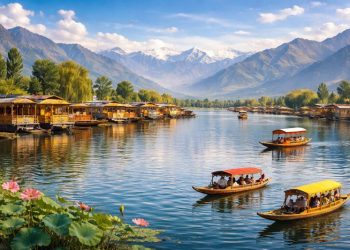


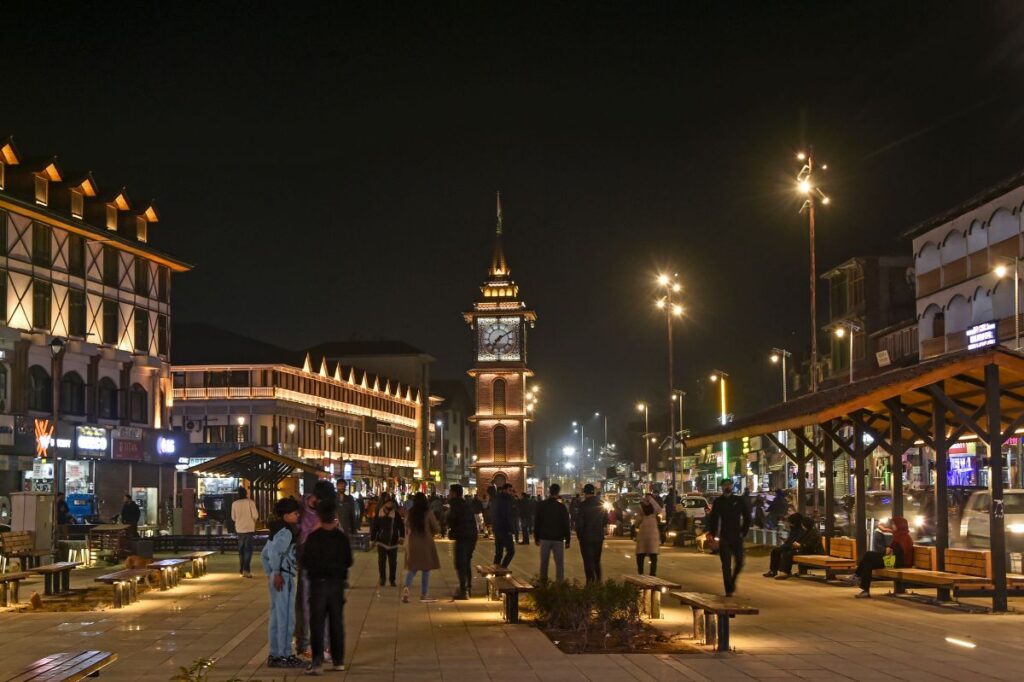
Over the past few years, crores of rupees have been spent on transforming Srinagar into a Smart City. Several projects have been undertaken to improve the city’s appearance, renovate roads, develop footpaths, install modern lighting and upgrade public infrastructure. Undoubtedly, the objective behind these initiatives was to make Srinagar a modern, attractive and well-developed city. However, when one looks at the present ground situation, several questions arise that deserve serious attention. The biggest question remains: Has Srinagar truly become a Smart City, or is the success of the project still largely limited to construction work and beautification?

One of the most noticeable examples is the development of roads and footpaths across the city. At several locations, roads were narrowed to create wider footpaths, with attractive tiles installed as part of the Smart City project. However, with increasing traffic congestion and the need to widen roads, some of these very footpaths are now being demolished to make additional space for vehicles. M.A. Road is one such example.
This raises an important question: Were the earlier development works planned by keeping future traffic requirements and the growing number of vehicles in mind? Had proper long-term planning been undertaken, perhaps public money spent on these structures would not have needed to be spent again on modifying or demolishing them within a short period.
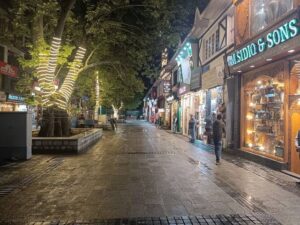
The condition of Lal Chowk, the city’s main commercial hub and one of the most prominent areas under the Smart City project, also deserves attention. Potholes can still be seen on certain roads in this important area, while tiles installed on footpaths have started coming loose at several places. Such conditions not only affect the overall appearance of the city but also create inconvenience for pedestrians and thousands of people who visit the area every day.
When substantial public funds are invested in a project, its durability and regular maintenance are just as important as its initial construction.
The concept of a Smart City should not be limited to an attractive Ghanta Ghar, selfie points, LED lights installed along roadsides or beautifully designed footpaths. A truly smart city is one where traffic management is efficient, roads are safe and properly maintained, pedestrians have convenient walking spaces, drainage systems function effectively and citizens enjoy a clean, organized and comfortable urban environment. Equally important is the regular maintenance of infrastructure developed under such projects.
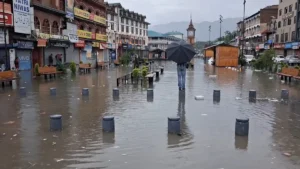
Srinagar is a city of immense historical, cultural and tourism significance. Thousands of residents, along with visitors and tourists, move through its streets every day. Therefore, its development requires comprehensive and long-term planning. Better coordination among different departments, proper assessment of future traffic requirements and priority for public convenience must remain central to all development initiatives. This would help prevent repeated construction and demolition at the same locations.
It would be unfair to overlook the positive initiatives undertaken under the Srinagar Smart City project. Several improvements are visible across different parts of the city. However, the real measure of these projects should not simply be their appearance but their usefulness, sustainability and the benefits they deliver to ordinary citizens.
It is now important for the concerned authorities to focus not only on launching new projects and completing construction works but also on assessing the condition, quality and maintenance of infrastructure that has already been developed. Public money can be utilized effectively only when projects are planned with a long-term vision, and the resulting infrastructure continues to serve citizens for years.
Ultimately, making Srinagar a truly Smart City requires more than attractive buildings, decorative tiles and modern lighting. The real success of the initiative will be reflected when its benefits become visible in the everyday lives of the people.